


BEHIND THE STAGE: SNAPSHOT INTO A PHOTOGRAPHER
- Mar 5
- 13 min read
For this round of Behind The Stage we are going behind the lens and into the photo pit with Amy Rose (Darkside Fairy), Sam Herbert (Sam Herbert Media), Alex Nelsen (Emerge Creative) and Shaun Wilkinson (Three6Shoota) to hear what it takes to be a live music photographer and where their inspirations lie.

What inspired you to pick up a camera?
AR - Mid 2024, after a breakup and years of putting everyone else before myself, I hit a breaking point. I started cutting out what and who were hurting me and finally asked myself what I actually wanted from life. Around that time I was beginning to more actively support the local band scene each week (very important to me to support your local community) I reconnected with a friend who was into band photography, something I’d always been curious about. Photography gave me a way back into the world of the music I love. As someone who always dreamed of being a vocalist/musician, picking up a camera felt like reclaiming creativity, identity, and a piece of myself I’d ignored for too long, that is how Darkside Fairy was born.
SH - For me I just always loved recording my scenery and my surroundings and loved looking back on cool places and things I've seen.
AN - The very first moment I remember was being overseas in Europe and seeing all this amazing scenery. So different to Australia where I had lived my entire life and I wanted to capture that. So with my first hand me down camera I started snapping away. When I moved back to Australia I was drawn to the idea of capturing energy and emotion especially moments that feel intense, fleeting, or raw. I have always
played music specifically pop punk/metal and similar genres so I thought what better way to capture emotion than taking snaps of live bands. I absolutely sucked at first had no idea what I was doing but slowly the camera became a way to translate sound, atmosphere, and identity into something visually compelling. And bands started wanting to work with me.
SW - I think I've always had some sort of interest in capturing moments. When I used to go to shows to watch some of my favourite artists, there was always something intriguing to me about watching the crew members and photographers running around while the show was happening and I would find myself focusing my attention primarily on them rather than the actual show that was happening right in front of me. Curiosity got the better of me and I bought my first camera back in 2017/18. I bought it with zero intentions of doing what I'm doing now, because at the time I thought it was something so far out of reach and unachievable for myself. Fast forward a couple years of shooting everything and anything that caught my eye, I made friends with Mason (drummer for Melancolia) at the time he was drumming for Madura Green. One night he asked me if I wanted to come shoot the show which was a new one for me, being there that night and being on the other side of the barrier was a feeling that I wanted to keep chasing because at that moment my work felt like it actually served some purpose. (Plus getting put on the door list for shows is pretty sick).
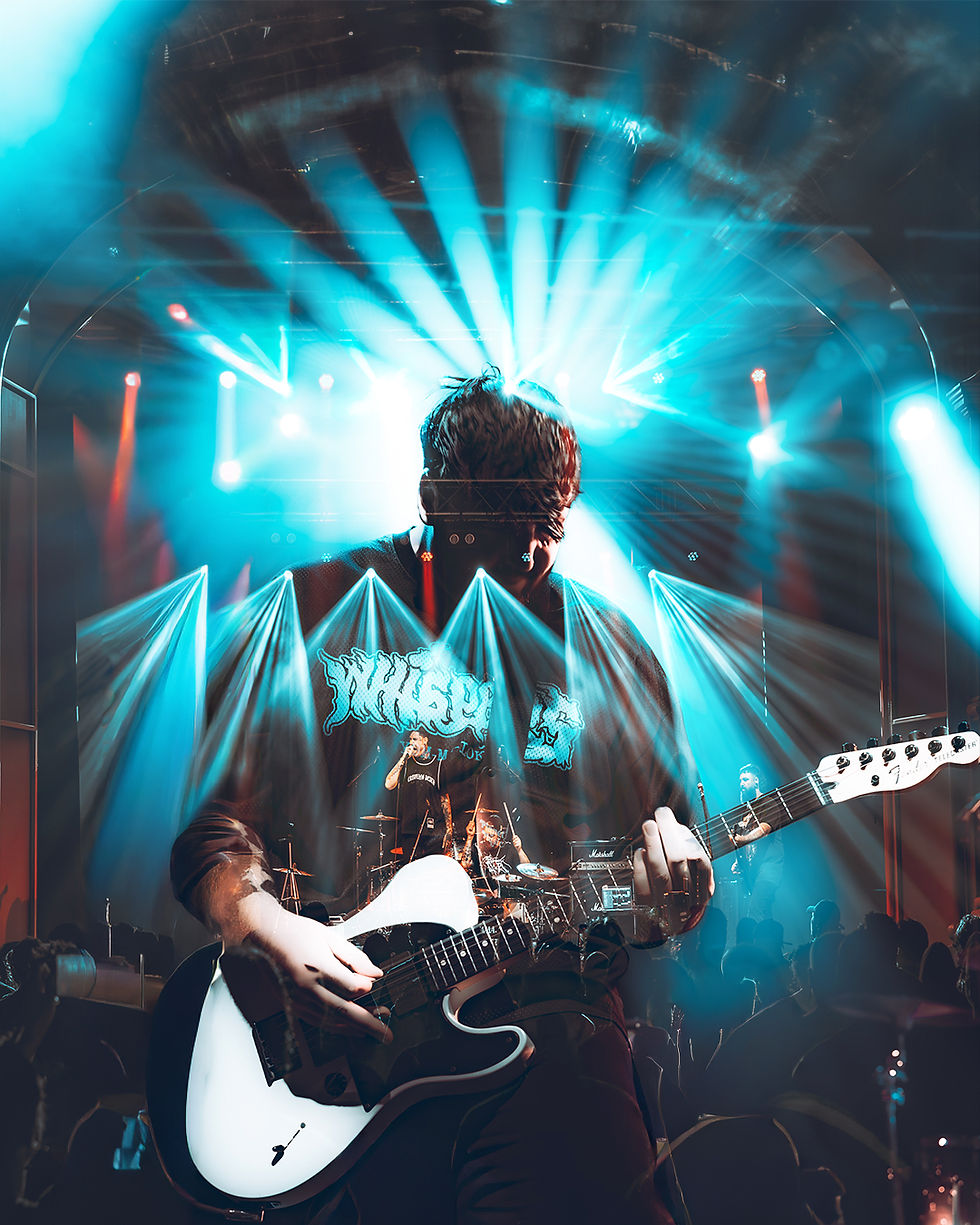
What was your first Alternative Music Photographer gig?
AR - My first gig was at Crowbar Brisbane, shooting for free just to learn the camera. What started as experimentation turned into real connection, I photographed Total Buzzkill and Zuko, bands that became friends, collaborators, and a genuine part of my journey, people who I truly support and support me in return.
SH - The first gig I ever shot was Wage War - I kinda lied to get the gig from the venue but we got it and got some banger photos.
AN - The first alternative music gig I can remember was shooting a live show in fortitude valley. Can’t remember bands exactly but pretty sure it was local Bris bands “Void matter” “War Bear” “Hollow Doubt” It was chaotic, dark, loud, and unpredictable which ended up shaping my love for live music photography and fast paced environments. Since then I went on to shoot multiple music videos for 2 of these bands and made amazing friends and experiences with them whilst being trusted to create visuals to bring their art to life. It’s is a huge compliment and responsibility and I’m so grateful to the bands and people that trust me to help them create visuals for their art.
SW - Would've been that night with Madura Green at The Gov, Hindmarsh.

Has your shooting style changed over time?
AR - Yes for sure, learning the rules helped me discover when to break them. Over time, my style naturally formed through experimentation and there is still so much to learn which I am excited about.
SH - I wouldn’t say it’s changed, but I've gotten “better” - I understand my surroundings more and always look to get angles that others don't.
AN - Definitely. Early on I was focused on capturing anything I could. Over time my style became more intentional with stronger colour control, darker moods, and a clearer focus on storytelling and identity rather than just documenting moments.
SW - Definitely has changed quite a bit in my opinion, but I also think that comes with understanding my camera more now and also avoiding becoming stale by trying new methods and styles.

What is your favourite piece of equipment?
AR - Currently my favourite piece of equipment is my harness and flash. A harness to support the weight of the camera without it causing pain or getting equipment damaged and a flash for those really hard lighting situations!
SH - My wide angle lens! I loooove wide angle stuff.
AN - New favourite is fisheye lens. It changes how a scene feels completely. I love lenses that let me exaggerate energy, distort perspective and get right in the middle of the action. Especially in live settings.
SW - I think I'm starting to get over it but i still love it (and I also broke it last week) but my centre field diopter filter, it's two pieces of glass with a gap in the middle but it makes for a very cool ghosting effect which adds a bit more of a feeling to photos.
Do you have any Photo Pit horror stories?
AR - Oh gosh, yes haha so far not many but one time I accidentally grabbed someone else's bag with all their equipment inside instead of my own bag as we all have similar backpacks under the barrier during sets and I only realised when I went to go pay for a soft drink, I quickly ran back down to the pit and apologised to the person who laughed with me about it. Also one time my SD card filled up during a 4 band photo and video shoot night and I had to take the last group shot on my phone! Always pack back ups.
SH - Just the usual getting knocked around in the pit lol.
AN - Nothing specific that comes to mind but crowded pits, unexpected stage divers, flying drinks, and barely any room to move all comes with the territory. Those situations force you to react fast and trust your instincts, which is where some of the best shots come from.
SW - I remember one specifically, I believe I was shooting Black Veil Brides, and the photo pit at this venue bends around with the stage (sort of semi - circle in shape) and it definitely felt like the barrier was closer to the stage that night so already starting off with less room than usual.
There would've been about 7 other photographers in the pit that night. Adding into the mix the first 3 songs rule, everyone was scrambling to get there shots in time and the only way to navigate this pit was either running out, through the crowd and then enter back in through the other side, or climb and crawl under each other which was pretty funny at the time.

Who is your dream band to shoot?
AR - Well I have been ever so grateful to shoot many bands I have always wanted to but the bands and artists on my bucket list still to shoot for are Yungblud, Avril Lavigne, Bring Me The Horizon and many more.
SH - Avenged Sevenfold!
AN - Any band that has a strong visual world around their music. Genre matters less than identity if the band knows who they are and brings intensity on stage, that’s what excites me. Though in saying this metal core has for a long time been my favourite style of music so to shoot any of the legendary bands in this genre would be a dream come true
SW - I would love to shoot Avenged Sevenfold if they ever decide to come back (hopefully sooner rather than later).

What has been your favourite shoot so far?
AR - Two shoots stand out.
The first was in August 2025, shooting Zuko at The Tivoli while they opened for Stray From The Path, Diamond Construct, and Orthodox. It was my first time being hired as their main Brisbane photographer, something I’d envisioned for a long time. They believed in me and my work, and that meant everything. Being backstage and on stage felt surreal, like I was one step closer to the dream of one day singing on a stage myself. It was also my first date with my now partner, Tyler, which makes it an unforgettable memory.
The second was December 2025, when Pitpass gave me the opportunity to shoot House of Protection and Architects. Standing that close to Architects felt unreal. I’d gone from not knowing how to use a camera at the start of 2025 to ending the year photographing one of the biggest metal bands in the world. That moment felt like proof that the hard work mattered and I’ll never forget it.
SH - The Used by far!
AN - Shoots where I have creative freedom and collaboration with the band are always my favourite. When the visuals, music, lighting, and attitude all align, the results feel cinematic and powerful. A couple of music videos I have worked on that I am really proud of include bands like. Total Buzzkill, Torizon, Void matter, We the hollow, Diskust, All Hours, Burn your name, Hollow Doubt to name a few.
SW - No bias but every Melancolia show, it always has something new and different to shoot. They're always mixing it up. Close second to that would definitely be Orthodox. Super high energy band which always makes for good photos.

How would you describe your style?
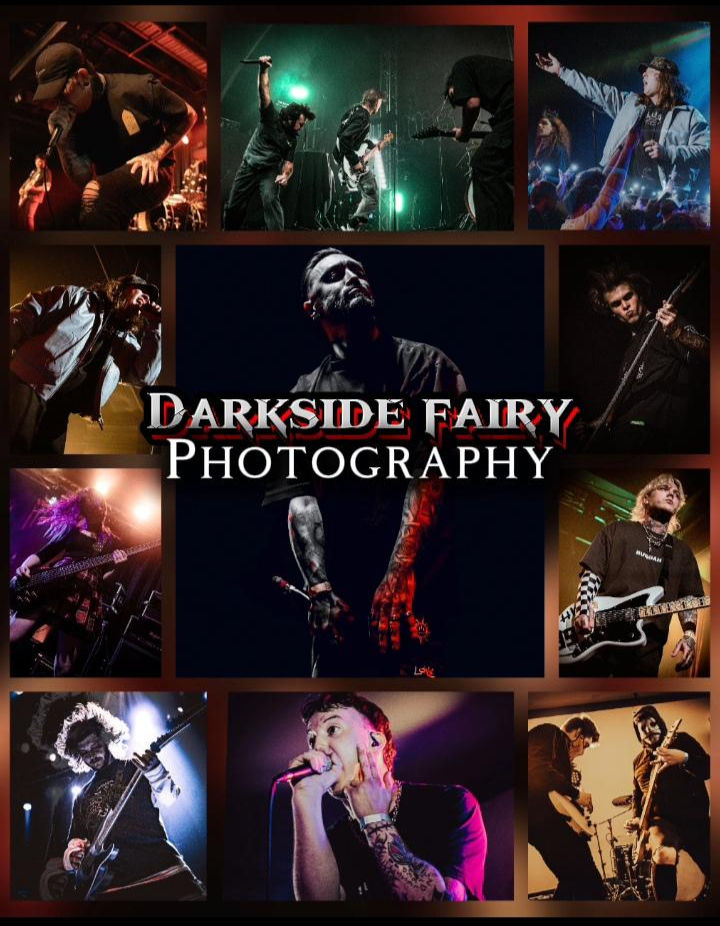
AR - My style lives in the space between shadow and pulse. I’m drawn to the raw, unfiltered moments where music becomes emotion and the darkness feels alive. I capture the heartbeat within the darkness, the sweat, the intensity, the vulnerability that exists for only a second before it’s gone. Through my work, I bring emotion to life, turning sound into something you can feel long after the lights go out.
SH - A little dreamy, a little environmental in the fact that I like to shoot wide and show the whole scene.
AN - Bold, dark, colourful, and high energy. I aim to create imagery that feels loud, atmospheric, and emotionally charged. visuals that match the intensity of the music rather than sitting quietly beside it.
SW - Probably the best way I could describe it would be desaturated and grungey.
What makes a good set to shoot?
AR - A great set comes down to energy. Strong lighting makes a huge difference, but it’s the movement and performance that really bring a shoot to life. When band members give everything on stage, when they move, connect, and feel the music it creates moments worth capturing. And when the audience comes alive too, that shared chaos and emotion is where the best shots are born.
SH - GOOD LIGHTING! Always good lighting.
AN - Energy and intention. Good lighting helps, but it’s more about how the band moves, how they connect with the space, and whether the performance feels genuine. The best sets feel uncontrolled but purposeful.
SW - Lighting always, good choice of colour scheme (not red) high energy and movement, if bands are static it can be quite challenging trying to make bands looks exciting.
Throughout your years of shooting, how has your camera setup changed?
AR - Experience taught me the importance of being prepared, backup batteries, SD cards, and secure gear. I went from borrowing equipment for months to then owning my own, and that shift showed me what truly matters when stepping into a show.
SH - I upgrade every few years but for the most part I get it basic and quality.
AN - My setup has become more streamlined and versatile. I run gear that allows me to move quickly, handle low light confidently, and switch between photo and video without losing momentum.
SW - It has stayed pretty much the same, the only thing I really change through are my lens choices, when I used to shoot just photos my whole kit was a bunch of prime lenses. Now that I do both video and photo, my main lens is a variable 28-75mm. I still have a couple primes but they come out pretty rarely these days.

What do you look for in a good shot when you are editing?
AR - I look for images that carry emotion, strong positioning, genuine facial expressions, and lighting that supports the mood of the moment. When editing, I’m drawn to frames that can be cropped in tighter, stripping away distractions so the emotion feels closer, heavier, and more intentional.
SH - Good lighting and composure!
AN - Emotion first. I look for images that feel alive strong expressions, movement, colour, and atmosphere. Technical perfection matters, but impact matters more.
SW - When everything is in focus (haha) I like to try and capture movement as crisp and sharp as possible so I shoot at around 1/400 - 1/500 shutter which can be challenging in dark venues. I shoot on high burst as well to try and get as many images of the action taking place and usually a few of them come out sweet. Editing wise, I love a good hazy image where I can dehaze a little in lightroom to bring out the subject a little more clearer but also maintain that cool effect. I prefer to give my style of work more of a cooler temperature feel, I think it just looks a little nicer in my opinion.
What challenges have you met as a travelling photographer?
AR - Travelling has taught me some practical lessons fast. Gear gets heavy, backpacks especially and I’ve learned that a small rolly suitcase saves energy and your back, particularly on long days. Staying charged, hydrated, and organised sounds simple, but it’s easy to forget in transit. The biggest challenge has been learning to always have a backup plan, because when you’re moving between cities, something will always test your preparation.
SH - Time. Being able to get to gigs with family and other commitments.
AN - Travel adds pressure limited time, unfamiliar venues, unpredictable lighting, and fatigue. You have to adapt fast and still deliver consistent work no matter the conditions.
SW - Bring enough portable storage and power sources with you. I learned the hard way that you're going to be capturing a lot of footage and photos and you're going to need somewhere to bank all of it while on the road. Power banks and portable chargers are also going to make life a lot easier, I do a lot of my work in the van when travelling between states so you want to be sure you have enough battery life to get your work done when you're nowhere near a power outlet.

What advice would you give to someone trying to get into Live Music Photography?
AR - Be inspired, but be you! There’s no right or wrong way to create art. The best way to learn is to get out into your local scene, shoot shows with the band’s permission, and figure out what works for your eye. Don’t be afraid to reach out and ask for advice or support, this community is more welcoming than you think. And most importantly, don’t compare yourself to others. That’s where impostor syndrome creeps in. Your perspective matters, your style matters, and there’s room for it. Always.
SH - Take lots of photos. Live music photography is probably the hardest genre of photo to take because the light sucks. If you can’t shoot extremely low light, you need to do it to learn. You’ll mess up a LOT especially with the edit, but once you do a few, you’ll learn that most venues are the same and you just gotta deal with it!
AN - Learn to shoot in bad light, get comfortable being uncomfortable, and don’t be afraid to start small. Build relationships with bands, respect the space, and focus on developing a style not just collecting photos. Reach out to other creatives that you aspire to be like make friends with them and learn off them. Same principles apply for music videos and press shoots with some added skills that need to be honed. After you learn to shoot in bad lighting and in chaotic moments learn to slow down take your time, learn how to light scenes intentionally to create images with depth and emotion. Watch other peoples videos that you aspire to create like and practice as much as humanly possible.
SW - It is hard to break through that ceiling, but if you are consistent and confident you will get there. Some people get the big gigs straight away and others don't but it's important to not let that get you down. A Lot of us are all chasing the same goal and we're here to help, not be your competition. I've been very fortunate to work alongside some great people in the industry and sometimes when I'm not feeling all that great about myself or maybe I doubt myself, they're always there to steer me back on course.

Who should we talk to next?


Comments